The boundary between self and world is rooted in the body. It can be located in direct experience—and it can dissolve.
Close your eyes and hold out your hand. What tells you where it is?
Proprioception provides you with that information. It is the body’s sensing of its own shape and position, enabling you to reach for a cup or bring your fingertips together without looking. Much of proprioception operates below the threshold of consciousness, but some crosses into direct experience.
Waving your hand with eyes closed makes proprioception more noticeable. You feel your hand moving from left to right, but also see its movement inwardly.
Proprioception is driven by signals originating from muscles, tendons, and joints. The skin contributes as well, relaying a steady hum of information about the body’s outermost layer. This input presents itself as a faint tingling sensation on the skin’s surface, so fine in texture that it can simply register as pressure.
Using this baseline input, the brain constructs an image of the body’s boundary, a three-dimensional representation that remains in the background of our awareness.
What follows traces these representations and their role in our selfhood. The mechanistic claims are exploratory; the experiential observations can be verified firsthand.
Representations are subtle and thus easy to overlook. We navigate daily life with our eyes open, flooding the brain with visual information that drowns out quieter signals. Closing the eyes helps bring these representations into focus.
Your hand is then represented in front of you as a hazy form, its contours barely distinguishable from the surrounding darkness. It is transparent to what lies behind it, yet visible to the mind’s eye. This is the sense of shape itself.
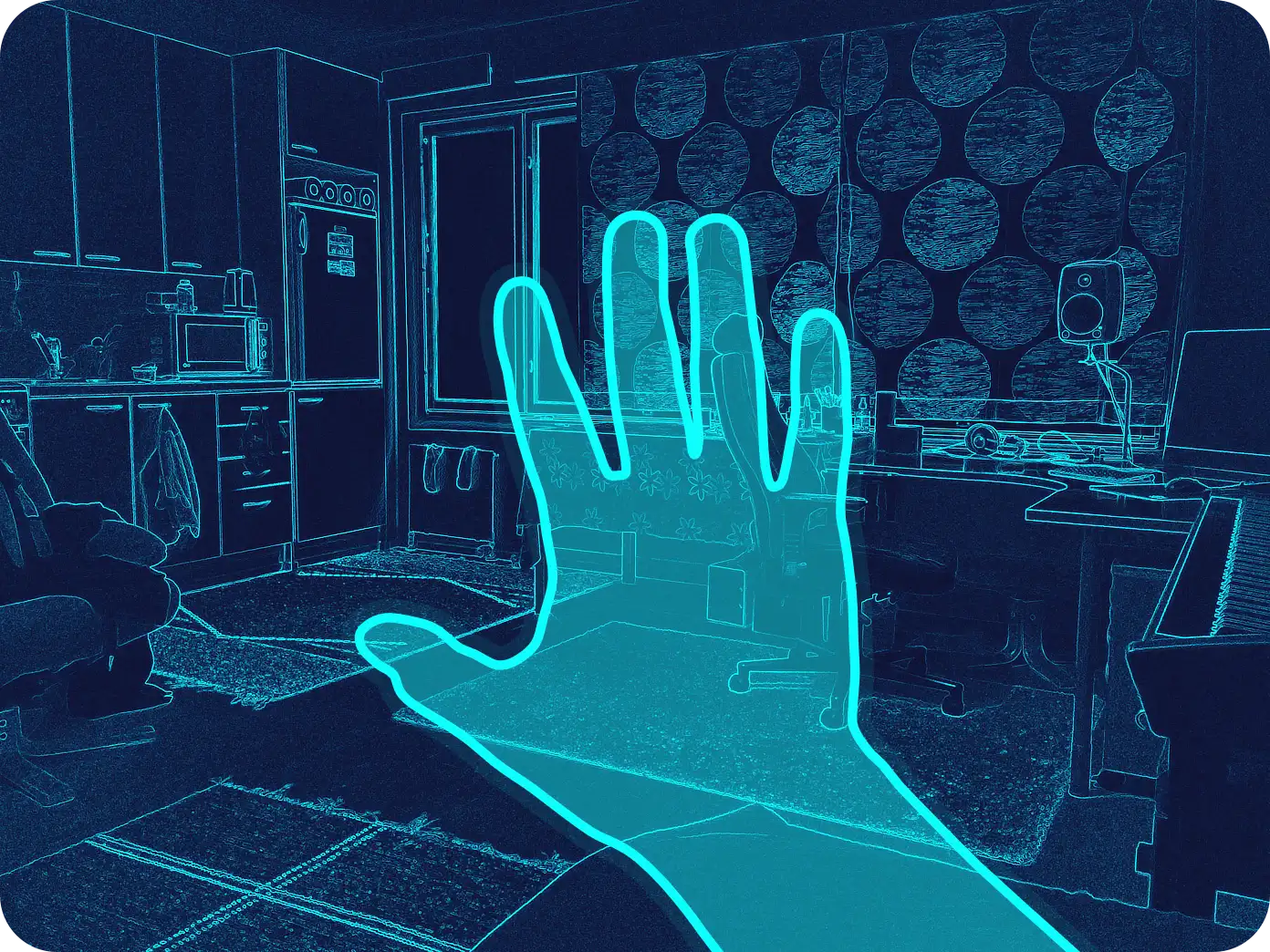
Keeping your eyes closed, imagine your other hand beside the one already extended. The two experiences are alike: both are appearances without a visual object, but they differ in stability. Images you conjure up fade as attention drifts. The hand representation, by contrast, persists on its own.
Place an object in front of you and rest your hand next to it. With eyes closed, turn your head to the left; your hand and the object shift to the right. Both the body and its environment are represented within a spatial map—a head-centric field of constructed images spanning all directions. These representations grow larger as objects are estimated to approach the head.
Your hand shifted to the right, but the sensation stayed the same. What moved was the representation as the spatial map reoriented. It is the map that tells you where your hand is, not the sensation alone.
At the heart of the spatial map, the body representation is continuously refreshed by proprioceptive input. When sensory information is absent, objects in the environment are represented with less precision; their locations are inferred from memory. The body representation is more firmly grounded than anything else in the map. This makes it the felt location of the self.
The body representation is not merely grounded. It has also become prominent. This felt location has solidified into a divide—we find ourselves here, and the world stands out there.
Open your eyes, look at an object, and draw your attention to its distance. The experience is of space between you and what you see. When you close your eyes, the gap remains: the object representation still appears on the other side. The sense of space itself is not visual, but an effect of the spatial map.
Visual content has no shape or location of its own. Object representations provide that, and as they appear at a distance, so does the world. This is separation.
* * *
Distinguishing self from other has been critical to survival throughout evolution. When facing a threat, an organism must have an acute awareness of where the body ends and danger begins. Without it, neither defense nor escape is possible.
The mechanism nature settled on is contraction: when the brain’s threat-response system is activated, muscles tense in defensive bracing. This bracing heightens the representation of the body’s boundary. The self-other distinction comes into relief exactly when it is most needed.
Not all muscle activity has this effect. Exercise produces dynamic, task-specific movement, while defensive bracing is sustained and spread through the body. Its unique proprioceptive character is what turns physical tension into felt separation. This is self-contraction.
We can recognize self-contraction in everyday life. Under stress, the body tends to tighten in the jaw, shoulders, and core, the areas most involved in defensive readiness. The body reacts to a perceived threat whether physical or not: the unease of a social situation, the dread of an uncertain outcome, or the sting of unwanted thoughts.
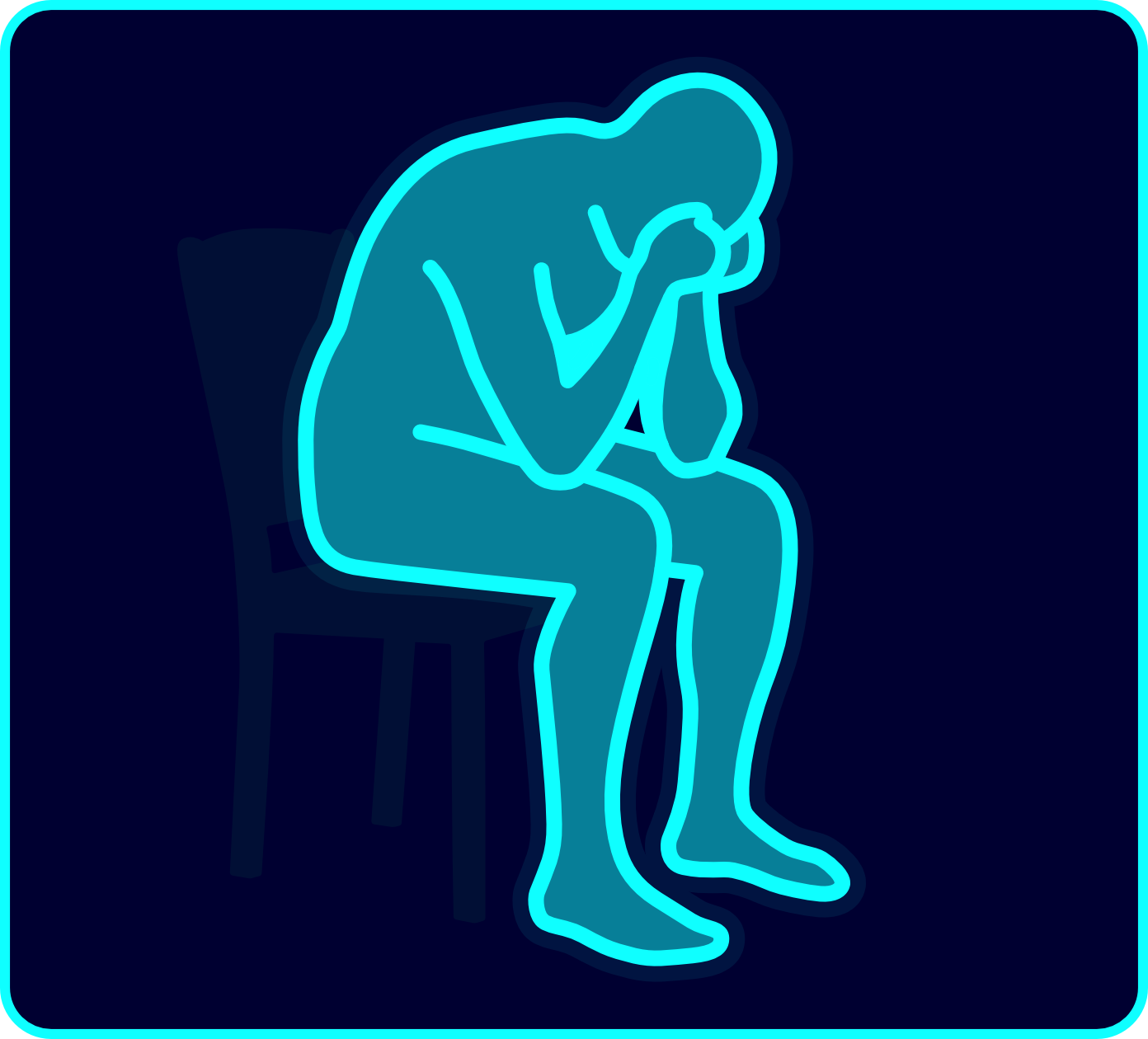
From early childhood, we learn to guard against disapproval and suppress spontaneous expression, holding tension in the effort to belong. This tendency has biological roots, but it is amplified socially through parents, peers, and the wider culture. By adulthood, self-contraction has become so familiar that it passes for normal. Sleep offers genuine respite, but the pattern often reasserts itself with waking, leaving its mark as a familiar knot in the chest.
Where ancestral threats could be resolved through fight, flight, or freeze, modern stressors are often abstract. Difficult life circumstances do not yield to a single decisive action, and the threat-response system has no clear signal to stand down. The bracing persists even when there is nothing concrete to protect against.
When painful thoughts arise, the body tends to contract as though attacked. To the brain, the bracing itself registers as evidence of lingering danger. We find ourselves ruminating—the brain circling a problem no action can resolve—only to reinforce the stress and contraction. The thoughts never settle.
As self-contraction grows chronic, the body representation heightens further, sharpening the divide between here and out there. We become bounded, isolated selves. A prominent boundary makes what it encloses feel finite, vulnerable to all that lies outside. In defending ourselves, we only deepen our insecurity. The loop sustains itself independently of the stressors that originally set it in motion.
Self-contraction is not, however, an inevitable feature of human experience. The pattern naturally loses its grip as we recognize that it no longer serves us. What stands in the way is not the release itself but unlearning the deep-seated instinct that makes contraction feel necessary in the first place.
What happens when self-contraction is released?
The muscles relax. As the proprioceptive signals of defensive bracing quiet, the body representation gradually subsides. The knot in the chest loosens, and the thoughts that circled without resolution wind down on their own.
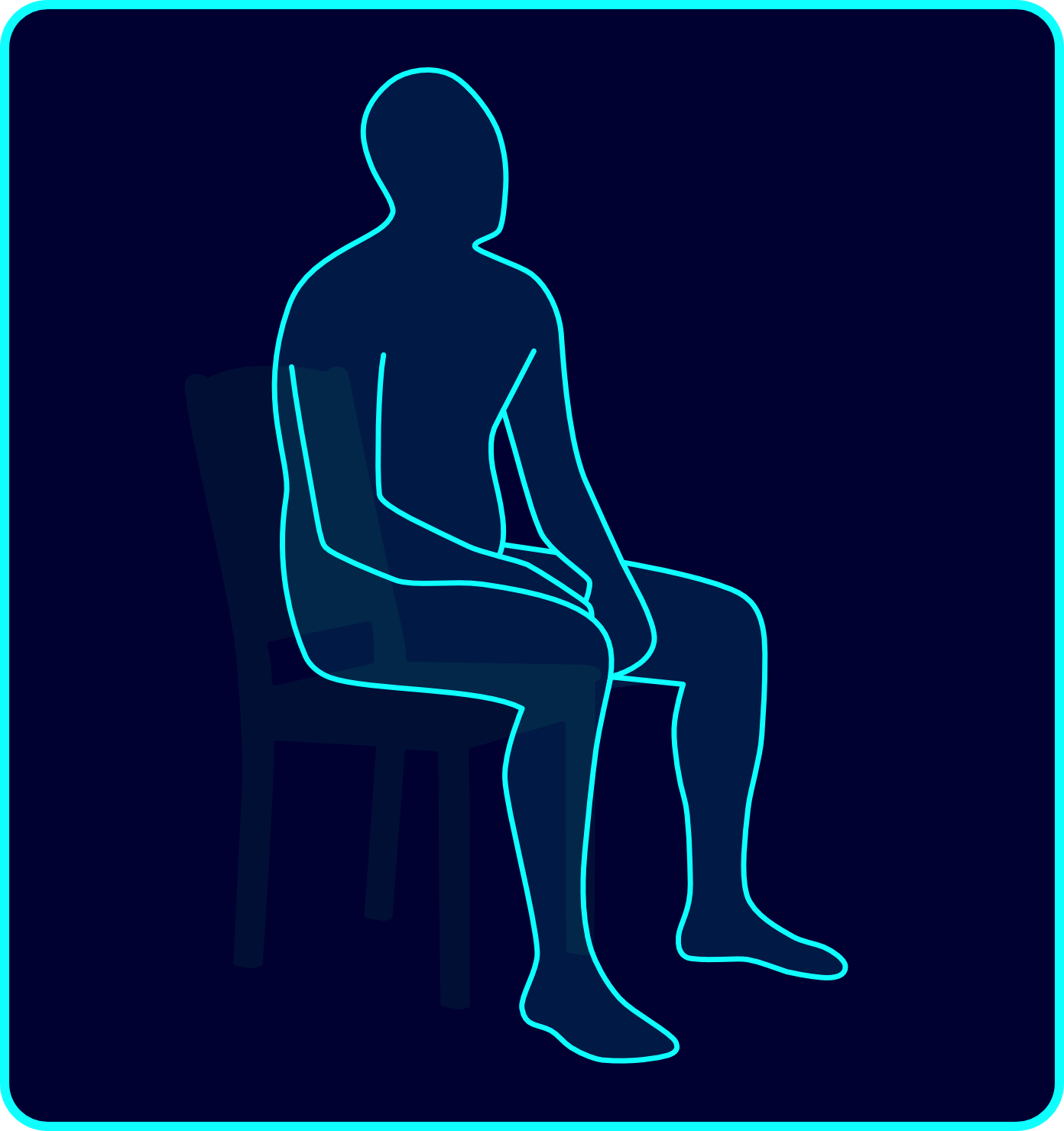
When the body representation becomes less prominent, the contrast with other representations fades. This contrast is the felt distance between here and out there. As it fades, so does the distance—the sense of space itself diminishes.
Object representations appear closer even though their size has not changed. Visual content takes its shape and location within the spatial map, and as the representations draw nearer, the world draws nearer with them.
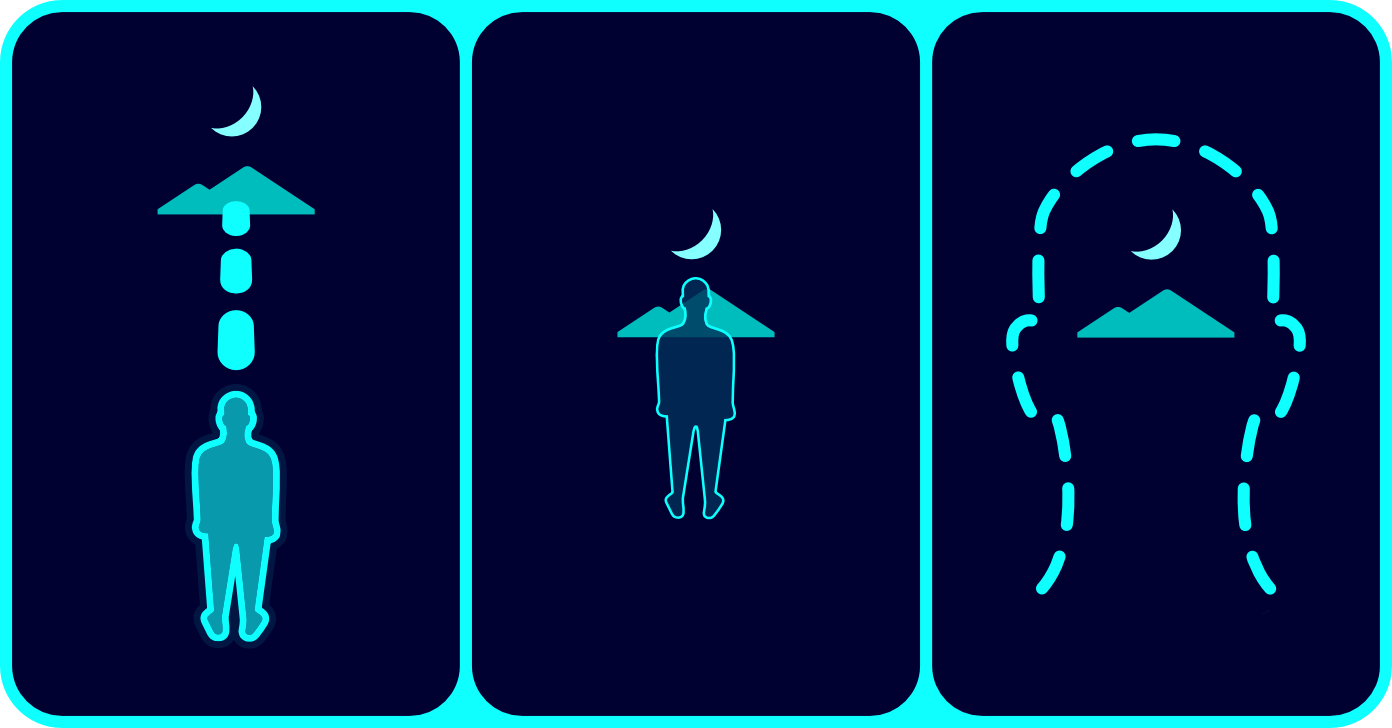
Close your eyes and hold out your hand once more. Imagine its representation dissolving until it resembles the surrounding darkness.
If your entire body representation were to dissolve in the same way, where would you find yourself?
Sensations would still exist, but not be represented anywhere in space. Thoughts would still arise, but without a bodily location to refer to. With no body representation to anchor a here, nothing would have the quality of being out there. The sense of being a bounded individual loses its footing as self and world are no longer held apart.
The body representation is the scaffolding of our selfhood. It is the felt basis on which higher-order conceptions of self are built, but which requires no conception of its own. Without this scaffolding, experience has no center.
This dissolution does not entail complete selflessness or functional collapse. A minimal body representation remains, reduced to a prominence comparable to that of other objects. The body is still experienced. It simply no longer stands out from anything else.
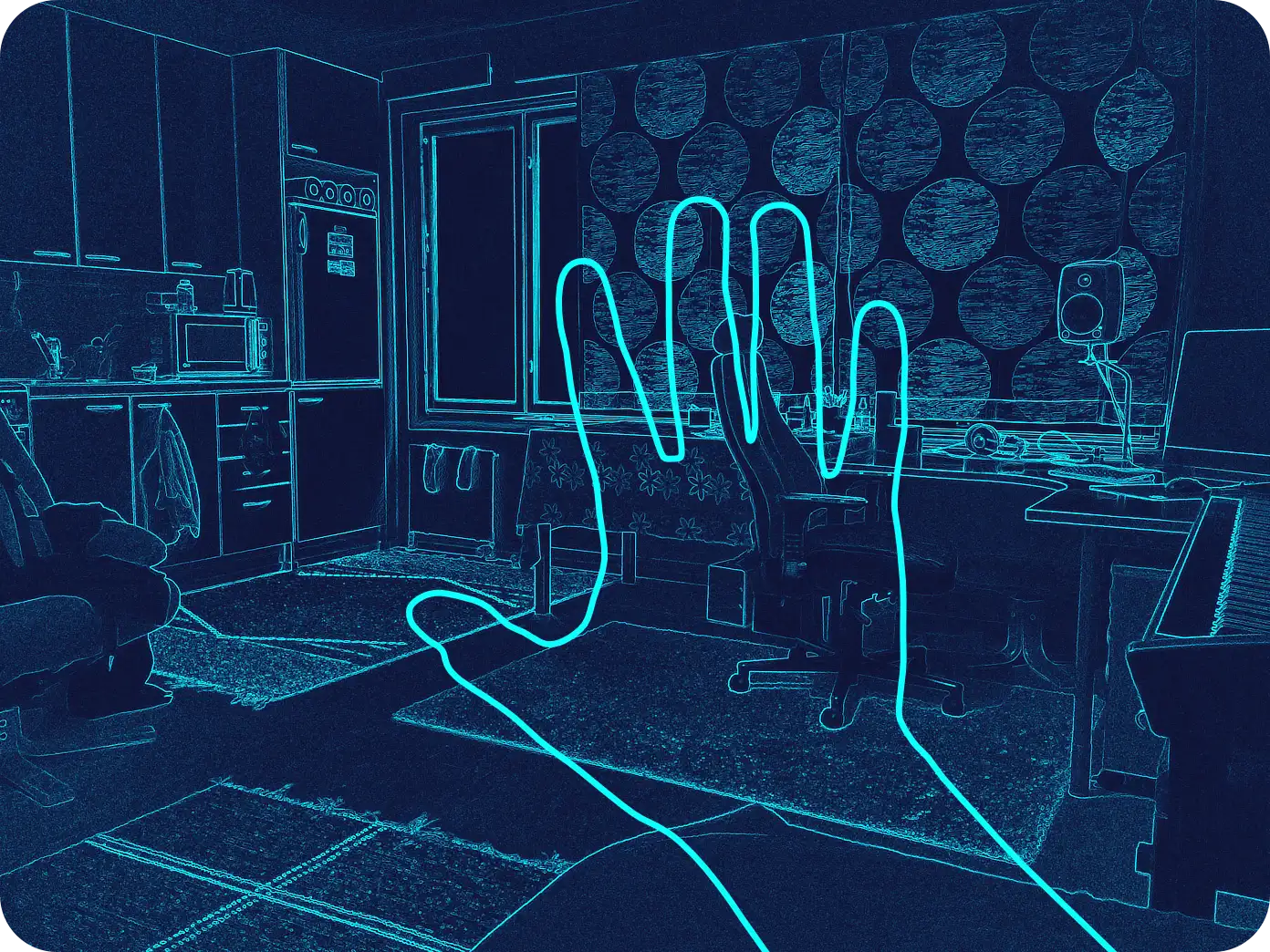
The sense of space all but vanishes. Objects appear with vivid colors and sharp detail, but without the gap that normally positions them as distant. Perception feels intimate, as though there is no difference between what sees and what is seen.
This does not impair interactions with objects because the brain retains full access to depth cues. Binocular disparity, relative size, and perspective all operate independently of the sense of space. The gap expresses felt separation, not the brain’s estimation of depth.
Contemplative traditions across cultures have long described states where the sense of separation has dissolved. What they point to is non-duality—the recognition that self and world are not fundamentally distinct. They are seen as one.
These traditions understand separation itself as the root of psychological suffering: a persistent sense that something essential is missing, arising from the experience of being a bounded, isolated self. When separation falls away, suffering is said to lose its foundation. What remains is spoken of as lasting peace and happiness.
The framework proposed here locates the boundary between self and world in the spatial map. As the body representation becomes more prominent through self-contraction, experience is divided into here and out there. This is what gives rise to separation.
Contemplative traditions describe the dissolution of the self-world boundary but have not identified the underlying physiological process. The variables proposed here account for that, opening the way to third-person study.
The claim that releasing self-contraction reduces body representation prominence awaits empirical verification. Likewise, how minimal body representation prominence relates to non-dual states has yet to be directly examined.
But the starting point requires no apparatus—simply close your eyes and hold out your hand.
* * *
Releasing self-contraction does not require a technique or practice. It is a matter of relaxing your muscles even when the instinct to brace is there. This relaxation comes naturally during sleep. The challenge is extending it to waking life, consistently enough for the body representation to subside. As it subsides, what you see gradually draws closer. These changes are tangible markers that the boundary between self and world is dissolving.
The release of self-contraction is the first step. There is no other step.